
THE ID SERIES | WHERE DESIGN MEETS PSYCHOLOGY
WHAT IS THE ID SERIES
The ID Series is where you learn interior design by putting it into practice. You learn to
DESIGN YOUR OWN HOME or
BUILD YOUR INTERIOR DESIGN BUSINESS.
Either way, we look at how people live and work in a space and, most importantly, how they feel when they’re in it.
This is where design meets psychology.
Once you start paying attention to how people feel in a space, you have a better idea of what to change and why.
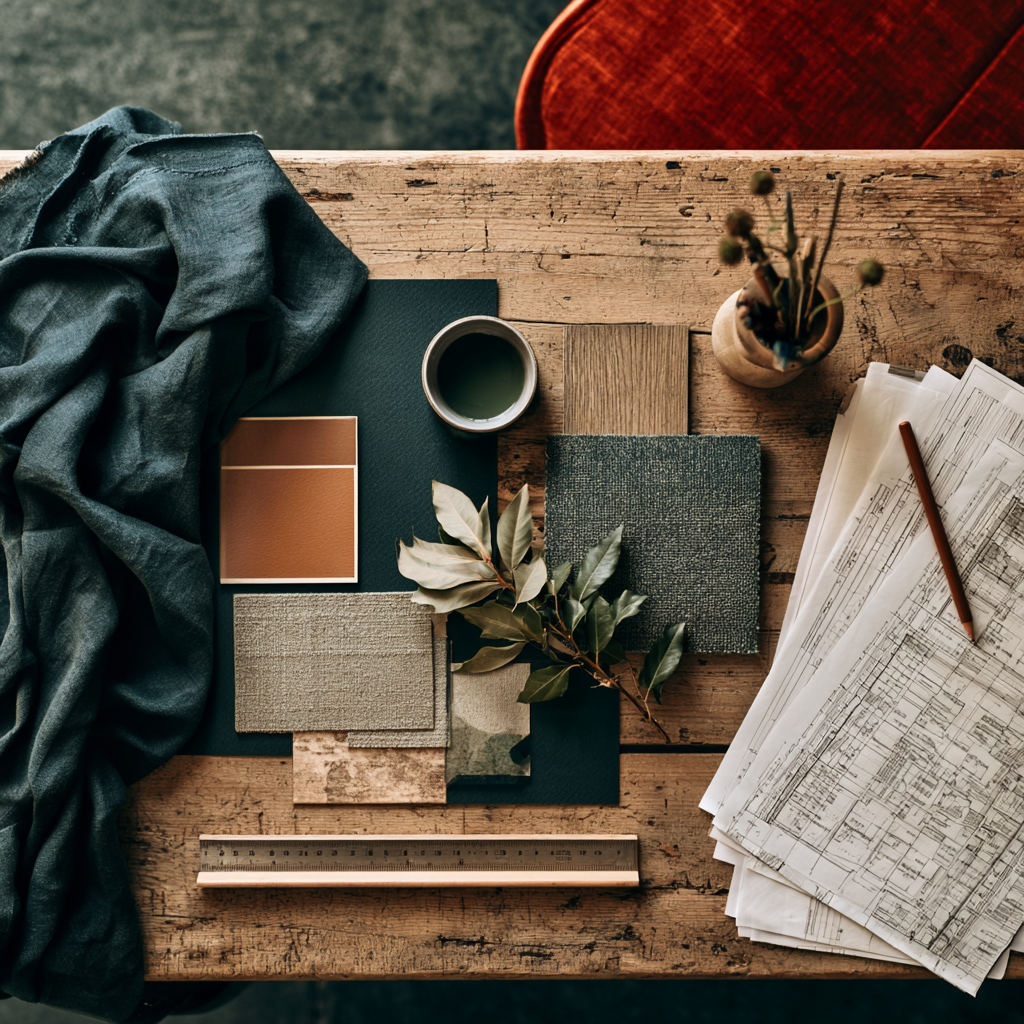
EXPLORE THE TWO PATHS BELOW & START WITH THE ONE THAT FEELS RIGHT FOR YOU.
DESIGN YOUR OWN HOME
Learn to measure, sketch, and use basic tools to improve your home. Explore materials, textures, colors, and lighting to help you choose what works with your space.
Start with a room that feels off, a pantry you want to rethink, or something you'd like to build.
EARN THROUGH DESIGN
Learn design or build on what you know. Discover new ways to think about design. Learn to assess a client’s space, use design principles to explain what you’d change and why, and turn those recommendations into a service you can confidently price and offer.
WHAT ELSE IS THE ID SERIES ABOUT
Building Skills + Staying Curious
We can save photos of a beautiful room, watch someone build a table in thirty seconds, and ask AI to perfectly picture the room we've been imagining.
Then we stand in our own space and realize we’ve pinned, saved, and rendered our way right up to the hardest part.
Where the heck does the sofa go?
We show you how to really look at a space, understand what it needs, and turn your ideas into action.
You’ll gain skills you can use at home or in projects for clients.
THE PSYCHOLOGY PART
You Feel A Room Before You Know Why
We talk about the five senses all the time. Sight, touch, hearing, smell, and taste. In design, I’m interested in what happens when they all come together.
Think of it as a kind of sixth sense. It’s the feeling you get when you walk into a room or spend time around someone. Sometimes you feel at ease right away. Other times something feels off, and it takes a while to put your finger on it.
Talking about how a room feels can sound a little woo-woo. I get it. It’s easier to point to a paint color than to explain why you want to linger in one room and leave another. In 1974, psychologists Albert Mehrabian and James A. Russell described three aspects of our emotional response to an environment. How pleasant it feels, how alert or stimulated we feel, and how much control we feel we have.
That last one matters in design. You can walk into a gorgeous room and still feel exposed if the only chair puts your back to the doorway. In another room, you know exactly where you want to sit. What drew you to that spot? Was it the softer light, the feel of the upholstery, or the fact that you could hear the person next to you without leaning in?
Dr. Candie R. Wilcken | PhD, MAIA
An interior architect, architectural psychologist, author, and educator. Dr. Wilcken has spent nearly 30 years designing interiors and more than 25 years teaching design at the university level. She started The ID Series to bring that experience together in one place. She teaches you how to look at a space, understand what the people using it need, and decide what’s worth changing.
It’s the same process she uses in her own work, and you can put it to use in your home or with clients..

Contact Hours
Contact Page
© TheIDSeries. 2020 - All Rights Reserved.